
Stress, the Nervous
System & Chiropractic Care in Paddington, Sydney
Perhaps the greatest challenge of modern life isn't that we experience stress. It's that so few of us are given the opportunity to truly recover from it.
Stress Is More Than a Feeling
When most people think about stress, they think about emotions. Feeling overwhelmed. Anxious. Busy. Exhausted.
But stress is much more than something we feel. Stress is a whole-body experience.
Every time your brain perceives a challenge—whether physical, emotional or environmental—it communicates with your nervous system, preparing your body to respond. Your heart rate may change. Your breathing may become shallower. Your muscles may become more active. Your attention narrows. Your body becomes ready to act. This response is beautifully designed.
In the right circumstances, it helps us perform, solve problems, protect ourselves and rise to challenges. Without it, we wouldn't be able to adapt. The problem isn't stress itself.
The challenge arises when life asks us to stay in that state for longer than our body was ever designed to.
Stress & Nervous System Health in Sydney
Life has never moved faster.
Our days are filled with deadlines, notifications, school drop-offs, overflowing calendars, long commutes, endless decisions and the quiet pressure to keep up. We wear multiple hats, often switching between professional, parent, partner, friend and caregiver in the space of a single day.
For many people, being busy has become a badge of honour. Yet beneath the productivity, the human body is working incredibly hard. Every conversation. Every deadline. Every difficult decision. Every unexpected challenge. Every moment of uncertainty. Your nervous system is processing it all.
At Home. Chiropractic Studio, we believe that understanding your nervous system is one of the most empowering things you can do for your health. Because health isn't about living a stress-free life. It's about helping your body adapt to the life you're living.


Your Nervous System Was Designed for Adaptation
The nervous system is your body's master communication network - almost like your very own internal GPS.
It coordinates movement. It processes information. It helps regulate breathing, digestion, sleep, balance and countless other functions that happen without us ever thinking about them.
Every experience throughout your day contributes to how much capacity your nervous system has. A difficult meeting. Poor sleep. Traffic. An argument. Long hours at a computer. Skipping lunch. Rushing from one responsibility to the next.
Individually, these experiences may seem small. Together, they create the cumulative load your body carries each day.
At Home., we often talk about the body's incredible capacity to adapt. But our capacity to adapt is dependant on how much load we are already carrying. This is where having a clear game plan in place to de-load the stresses of daily life from your body and nervous system can be extremely beneficial.

Fight - Flight vs Rest - Digest
Understanding the Two Sides of Your Nervous System
Your nervous system is remarkably intelligent. Throughout every day, it is constantly assessing your environment and deciding how best to help you respond. Sometimes that means preparing you for action. At other times, it allows you to slow down, recover and restore.
These two broad states are often described as the sympathetic ("fight - flight") and parasympathetic ("rest - digest") nervous systems.
Despite the names, neither state is inherently good or bad. Both are essential.
When you're giving an important presentation, responding to an emergency, exercising or making quick decisions, your sympathetic nervous system helps mobilise your body's resources. Your heart rate may increase, your breathing changes, your muscles become more prepared for movement, and your attention becomes more focused. This is a normal, healthy response.
Equally important is your parasympathetic nervous system. This is the state in which your body can recover, repair, regulate, digest food, fight off a cold, sleep deeply, restore energy and even make a baby. It helps create the conditions that support natural health, learning, growth and adaptation.
Healthy nervous systems move fluidly between these two states - much like the accelerator and brake pedals in a car. A healthy nervous system knows when to accelerate, and when to brake. The challenge for many people today is not that they experience stress — it is that modern life often provides very few opportunities to take the foot off the accelerator and move to the brake.
Long working hours, constant notifications, family responsibilities and the expectation of being permanently available can leave us existing primarily in fight - flight. Always feeling “on”. Always thinking. Always planning. Always responding.
Our role is not to eliminate stress from your life — that simply isn't realistic. Instead, we aim to help your nervous system to change gears easily and appropriately, so you can adapt to whatever life throws you.

Modern Life Asks a Lot of the Human Body
Our grandparents never spent ten hours each day sitting in front of multiple screens. They weren't constantly interrupted by notifications. They didn't finish work only to continue answering emails well into the evening.
Modern life has created demands that previous generations simply didn't experience. Many people tell us they feel like they're always "on." Always thinking. Always planning. Always solving the next problem.
Even when they finally sit down, their mind keeps going. Over time, many people also notice physical changes:
Tightness through the neck and shoulders.
Jaw tension.
Headaches.
Shallow breathing.
Reduced movement.
Difficulty switching off.
Feeling tired, yet unable to fully relax.
These experiences are common. Not because of getting older or the body is failing. But because it has been working overtime to keep adapting.
The Spine, Movement & the Nervous System
The spine does far more than hold us upright. It allows us to move through the world. It protects the spinal cord, spinal nerves and the brain stem.
The spine provides the framework through which the body responds to everyday physical demands. When we experience prolonged periods of sitting, repetitive movement or sustained muscle tension, it can influence our spinal function, how comfortably we move and how our body responds to load.
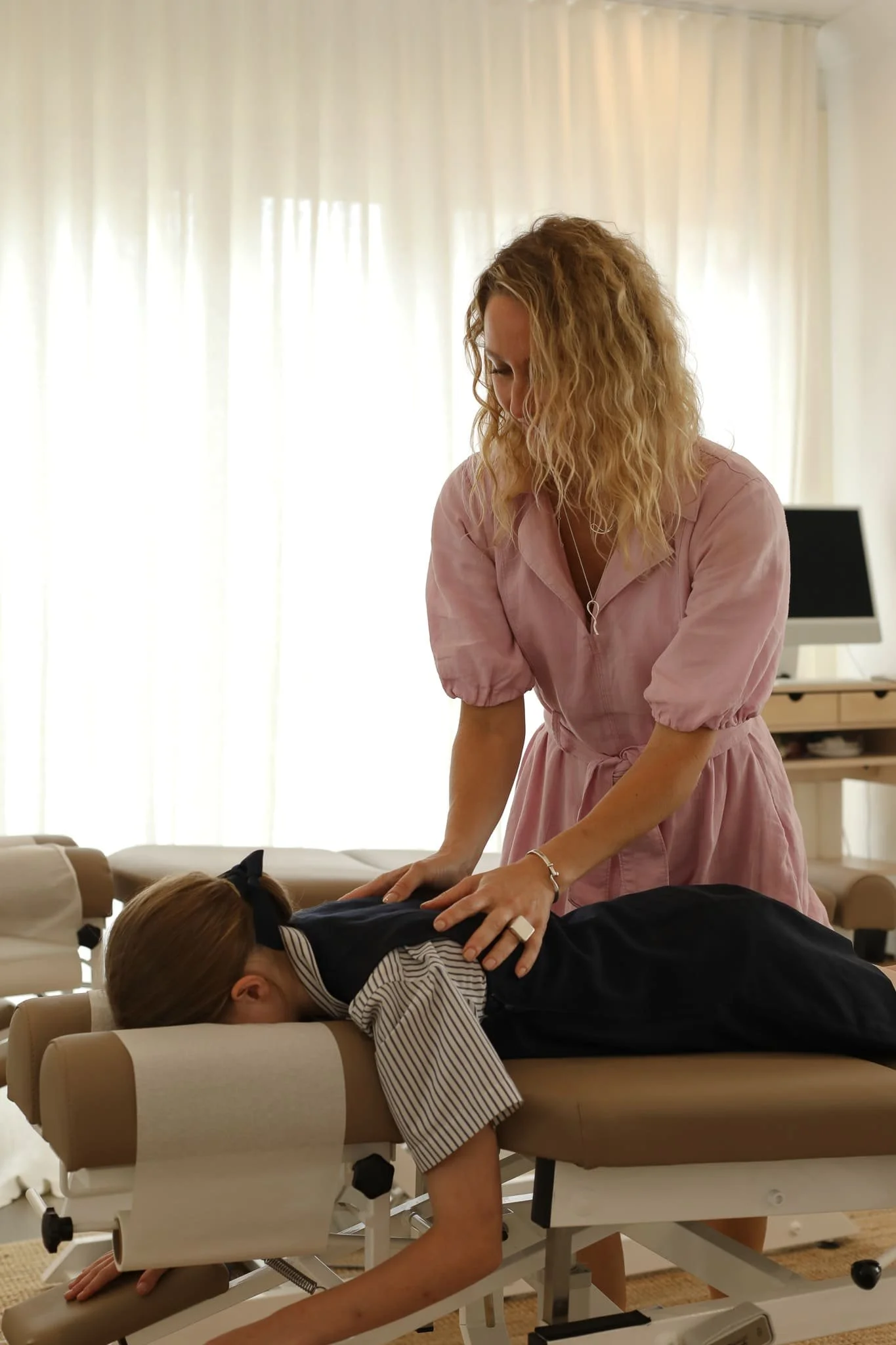
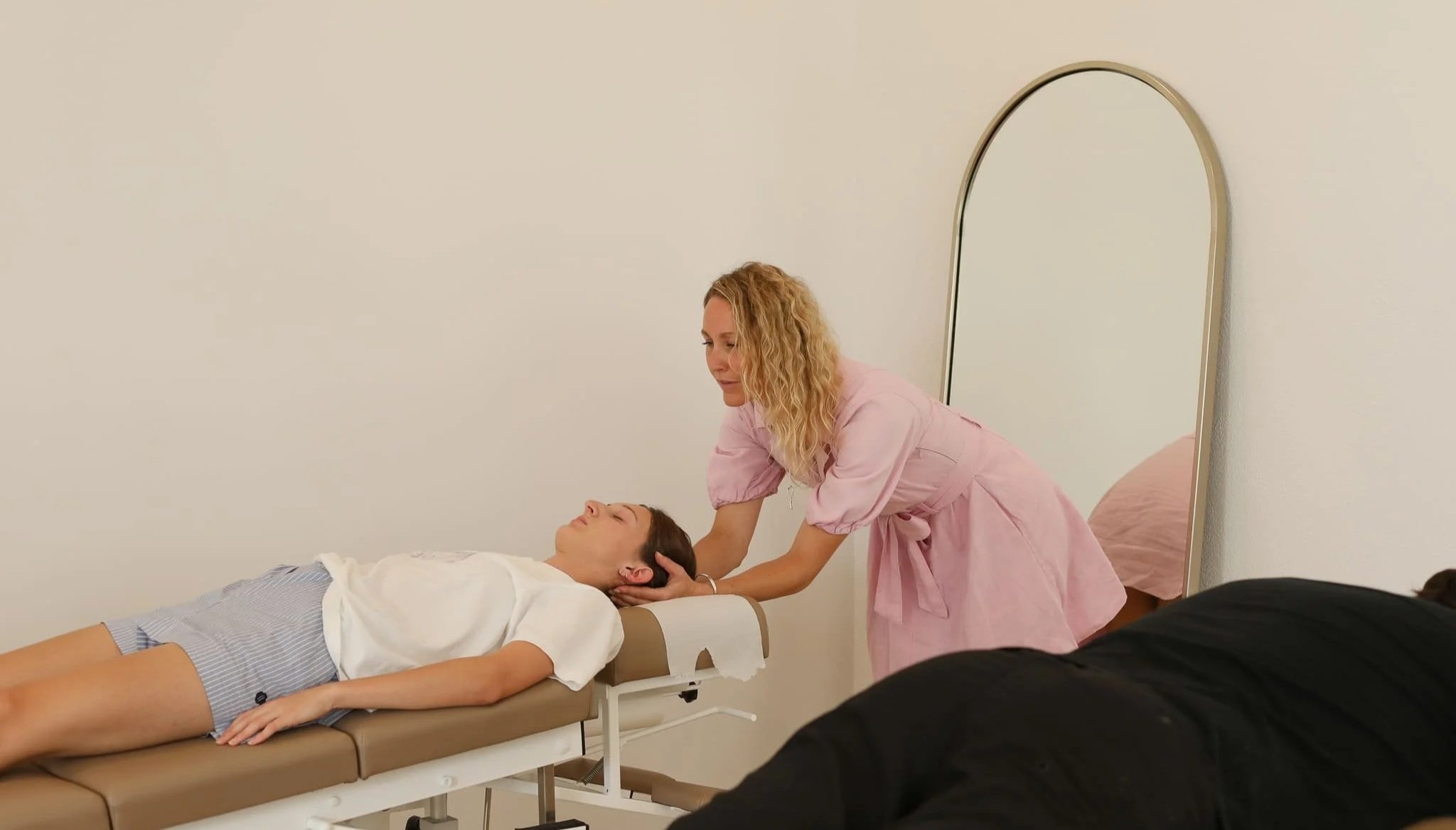
A Chiropractic assessment considers how your spine and joints are moving and how that may be impacting the way your nervous system is able to communicate with your body.

Why People Choose Chiropractic Care
People rarely book an appointment because they simply feel "stressed." They come because they notice the physical impact stress has had on their body. Perhaps their neck feels constantly tight after long days at work. Perhaps they're finding it difficult to move as freely as they once did. Perhaps they've realised they're holding tension without even noticing.
Others simply want to better understand how their body is adapting to the demands of modern life and whether Chiropractic care may be an appropriate part of their broader health routine.
An initial consultation provides the opportunity to discuss your health history, lifestyle, movement patterns and goals before completing a thorough Chiropractic assessment including specific nervous system testing.
If Chiropractic care is appropriate for you, we'll explain our findings clearly and work with you to develop an individualised plan that aligns with your needs.

Self Care & Recovery Is Not a Luxury
One of the greatest misconceptions in modern society is that self care & recovery is something we earn after everything else is finished. In reality, these are the very things that allows us to continue adapting well to our stress loads.
Just as muscles need recovery after exercise, the nervous system also benefits from periods of restoration. This doesn't always require a weekend away. It can begin with simple, consistent habits:
A walk without your phone.
Five minutes of quiet breathing before the next meeting.
Sharing dinner with your family.
Laughing with friends.
Reading before bed instead of scrolling.
Choosing sleep over one more email.
A Chiropractic adjustment.
These moments may seem ordinary. Yet together they create an environment where the body has greater opportunity to recover and adapt.
Small Daily Habits That Support a Healthy Nervous System
There is no single habit that creates resilience. Instead, it is often the accumulation of many small choices over time.
Move Frequently
The human body was designed to move. Gentle movement throughout the day can help reduce the effects of prolonged sitting and encourage healthy spinal mobility. Try setting an alarm on your computer or device every 30-45 minutes that encourages you to stand, get a glass of water, take a break, or step outside for a moment.
Protect Your Sleep
Quality sleep plays an important role in recovery, learning and overall wellbeing. Aim to go to sleep and wake up at the same time every day to help your body set its rhythm.
Create Space Between Tasks
Even brief pauses throughout the day can help interrupt the cycle of constant busyness. Rather than taking up an entire 60 minute meeting - aim to be finished with 10 minutes to pause, breathe and take a stretch break before moving on to the next meeting or task.
Breathe With Intention
Slow, relaxed breathing can be a simple way to bring awareness back to your body during a busy day. The box-breathing technique can particularly helpful for changing gears in your nervous system and bringing you out of fight - flight.
Spend Time Outdoors
Natural light, fresh air and movement remain some of the simplest ways to support overall wellbeing. Time in nature is some of the very best medicine.

Why Home. Chiropractic Studio
At Home., we don't believe the goal is to eliminate stress.
Life will always ask things of us. There will always be seasons of challenge, growth, responsibility and change.
Our philosophy is about helping people build greater capacity to meet those moments. To move well. To recover well. To adapt well.
Through world-class Chiropractic care, education and an appreciation for the remarkable relationship between the spine, movement and the nervous system, we aim to support people in living healthier, more connected lives.
Not because life becomes easier. But because the body becomes better supported to navigate it.
Your Health Begins With Understanding Your Nervous System
If you've been feeling the physical effects of a busy life, you're not alone.
Whether you're navigating work pressures, raising a family, caring for others or simply wanting to better understand how your body responds to stress, we'd love to welcome you to Home.
A Chiropractic consultation is an opportunity to better understand how your spine, movement and nervous system are adapting to the demands of your daily life, ask questions in a calm and supportive environment, and discover whether Chiropractic care is an appropriate part of your overall health journey.
Book your Stress & Nervous System Assessment today and discover a thoughtful, individualised approach to supporting your body's remarkable capacity to adapt.